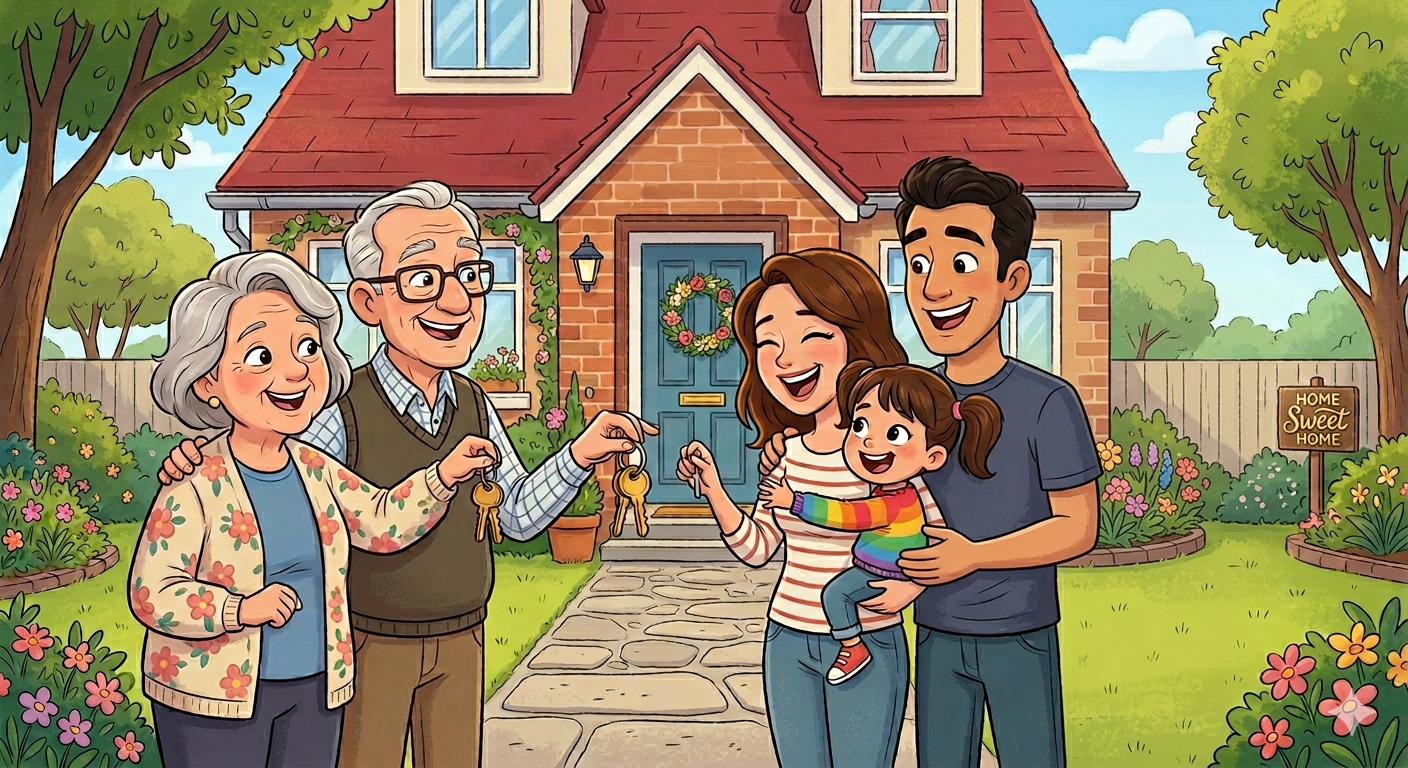
Purchasing a home from a parent can be a great way to achieve homeownership, and using a gift of equity can make the process even more beneficial. Typically, when a parent sells their home to a child, they can give them a gift of equity, which is the difference between the home's market value and the sale price. This gift can be used as a down payment, reducing the amount the child needs to finance.
In most cases, the process starts with an appraisal of the parents' home to determine its market value. The parent and child then agree on a sale price, which is usually lower than the market value. (IMPORTANT: These transactions typically remove the cost of agent fees, which can save up to 6%) The difference between the two is considered a gift of equity. For example, if the home is worth $300,000 and the parent sells it to the child for $250,000, the gift of equity would be $50,000.
The benefits of using a gift of equity are numerous. Generally, it allows the child to purchase a home with little to no down payment, which can be a significant advantage for those who may not have enough savings. Additionally, the child may be able to avoid paying private mortgage insurance (PMI), which can save them hundreds of dollars per year. In some cases, the gift of equity can also be used to cover closing costs, further reducing the child's out-of-pocket expenses.
To qualify for a gift of equity, the parent and child must meet certain requirements. Typically, the parent must have owned the home for a certain period, and the child must have a good credit history. The child will also need to qualify for a mortgage, and the lender will need to approve the gift of equity. It's essential to work with a knowledgeable lender who has experience with gift-of-equity transactions to ensure a smooth process.
Here are the general steps involved in purchasing a home from a parent using a gift of equity:
- The parent and child agree on a sale price, which is usually lower than the market value.
- An appraisal is done to determine the home's market value.
- The gift of equity is calculated as the difference between the market value and the sale price.
- The child applies for a mortgage, using the gift of equity as a down payment.
- The lender approves the gift of equity and the mortgage application.
- The sale is closed, and the child becomes the new owner of the home.
Overall, purchasing a home from a parent using a gift of equity can be a great way to achieve homeownership while minimizing out-of-pocket expenses. By understanding the process and benefits, families can make informed decisions and take advantage of this unique opportunity.
It's also important to consider the tax implications of a gift of equity. Generally, the parent will not have to pay capital gains tax on the gift, but they may be subject to gift tax. The child will also need to consider the tax implications of owning a home, including property taxes and potential tax deductions. It's recommended to consult with a tax professional to understand the specific tax implications of a gift of equity transaction.
In conclusion, a gift of equity can be a valuable tool for families looking to transfer wealth and achieve homeownership. By following the right steps and working with knowledgeable professionals, families can navigate the process and enjoy the benefits of this unique opportunity.